
What Role Do Connectors Play in Rigid Flex PCB Assemblies?
Connectors Play in Rigid Flex PCB Assemblies
Having a robust and reliable flex circuit in your electronics device is essential to its overall function and performance. Whether your design is for critical applications in the military, medical, or aerospace industries, or consumer products like smart phones and computers, flex PCB connectors are pivotal to upholding the operational integrity of all these devices.
Flex PCBs provide a number of benefits that traditional rigid flex pcb cannot match, including space and weight savings, improved signal transmission, and more. Despite these advantages, there are some concerns that designers need to take into account when designing a rigid flex pcb, such as ensuring the integrity of the flexible sections of the design. One way to do this is by using mechanical stiffeners. These are designed to act as stable points that prevent the flex circuit from becoming damaged or failing.
These stiffeners are typically made of FR4, a low-cost material that is ideal for use with flex PCBs. They are designed to accommodate the high-density connections required by many electronic devices, and can be incorporated in a variety of ways depending on your specific needs. For example, you can attach them to the backside of your rigid flex board with a soldering process or with an adhesive. You can also attach them to the flex circuit using the same method, or you can use them in conjunction with a mechanical stiffener for added strength.
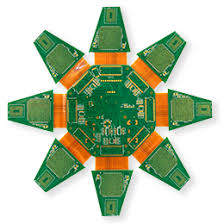
What Role Do Connectors Play in Rigid Flex PCB Assemblies?
Another option is to utilize conductive tracks instead of connectors. This will improve the reliability of your flex circuit because signals won’t have to travel across connectors or through cables. Moreover, this will reduce the chances of signal degradation due to mechanical stress, which is a common issue with wire harnesses.
With a rigid flex pcb, you can also save on space by eliminating the need for bulky cables and connectors. This will allow your device to fit into smaller spaces, while still ensuring that all the necessary connections are properly made. Finally, a rigid flex pcb offers improved heat dissipation, which means that your components will stay cooler and last longer. This can be especially important in critical industries, as it can reduce the risk of overheating and failure.
To maximize the performance of your rigid flex pcb, you should work with a reputable turnkey PCB assembly company that has the experience and expertise to ensure that your final product meets all your specifications. This will help you avoid costly mistakes and shorten your time-to-market. To learn more, contact a company that offers a free consultation and quote for your project. They will be able to answer any questions that you may have and recommend the best solution for your application. They will also be able to offer advice on the best rigid flex pcb materials for your project. Moreover, they will be able to provide a cost-effective assembly service that will meet all your requirements.