
How does precision affect PCB manufacturing?
precision affect PCB manufacturing
Precision is a critical factor in the manufacturing of Printed Circuit Boards (PCBs), as it directly impacts the functionality, reliability, and overall quality of electronic devices. In an industry where even the slightest deviation can lead to significant issues, understanding the role of precision in PCB manufacturing is essential for achieving optimal results. From design to fabrication and assembly, every stage of the PCB production process must adhere to stringent precision standards to ensure that the final product meets the desired specifications.
The precision of pcb manufacturing begins with the design phase. Advanced computer-aided design (CAD) software allows engineers to create intricate layouts with high levels of accuracy. During this stage, precision is paramount, as it dictates how components will be placed, how traces will be routed, and how signals will be transmitted across the board. Any inaccuracies in the design can lead to misalignments or incorrect connections, ultimately resulting in circuit failures. Moreover, precise design files ensure that manufacturers can produce PCBs that meet the intended functionality and performance criteria.
In the fabrication stage, precision becomes even more critical. PCB manufacturing involves processes such as etching, drilling, and lamination, all of which require exact measurements to produce the desired outcomes. For example, the width of the traces and the spacing between them must be precise to prevent short circuits or signal degradation. The industry often follows specific tolerances, such as IPC-2221 standards, which define acceptable limits for various aspects of PCB design and manufacturing. Failing to adhere to these tolerances can lead to defective boards that fail to perform as expected.
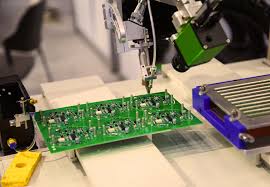
How does precision affect PCB manufacturing?
Precision is also crucial during the assembly of components onto the PCB. Surface-mount technology (SMT) has become increasingly popular due to its ability to facilitate the placement of tiny components on densely packed boards. However, the accuracy of component placement is vital; misalignment can result in poor electrical connections, leading to malfunctioning devices. Automated pick-and-place machines are commonly used to ensure precise placement of components, but they require accurate programming and calibration to function correctly. Any deviation during this process can compromise the integrity of the entire PCB.
Quality control measures in PCB manufacturing are designed to ensure that precision is maintained throughout the entire production process. Various testing methods, such as automated optical inspection (AOI), X-ray inspection, and electrical testing, are employed to detect defects caused by precision errors. These tests can identify issues such as misaligned components, incorrect trace widths, or faulty connections. By catching these problems early, manufacturers can reduce waste and improve yield rates, ultimately contributing to higher quality products.
The overall reliability and performance of the final PCB are heavily influenced by the precision achieved during manufacturing. In applications where PCBs are subjected to harsh conditions—such as automotive, aerospace, or medical devices—high precision is even more critical. Any deviations can lead to failures that may pose safety risks or result in costly repairs. For instance, in medical devices, a malfunctioning PCB can jeopardize patient health, making precision a non-negotiable aspect of the manufacturing process.
In conclusion, precision plays a fundamental role in PCB manufacturing, impacting every stage from design to production and assembly. Maintaining high levels of accuracy is essential for ensuring the functionality, reliability, and quality of PCBs. As the demand for increasingly complex electronic devices continues to grow, the importance of precision in PCB manufacturing will only increase. Manufacturers that prioritize precision in their processes are better equipped to deliver high-quality products that meet the rigorous demands of modern technology, thereby enhancing their competitive edge in the market.