
How Do You Select the Right Automation Tool for Regression Testing?
Select the Right Automation Tool for Regression Testing
Selecting the right automation tool for regression testing is a critical decision that impacts the efficiency, accuracy, and effectiveness of the software testing process. Regression testing ensures that new updates or changes to an application do not break existing functionalities. With numerous automation tools available, choosing the most suitable one requires careful evaluation of various factors, including compatibility, ease of use, scalability, and cost-effectiveness.
One of the most important considerations when selecting an automation tool for regression testing is compatibility with the technology stack. The chosen tool should support the programming languages, frameworks, and platforms used in the application. For example, if an application is built using JavaScript, a tool that supports Selenium or Cypress might be ideal. Similarly, for AI-based applications, tools that integrate with machine learning testing frameworks, such as TensorFlow Testing, would be more effective. Ensuring compatibility prevents integration challenges and simplifies the automation process.
Ease of use is another key factor. Some automation tools require extensive programming knowledge, while others offer low-code or no-code solutions that allow testers with minimal coding experience to create and execute test cases. Organizations should assess their team’s technical expertise and choose a tool that aligns with their skill level. A user-friendly interface, detailed documentation, and strong community support can enhance the adoption and effectiveness of the tool. The easier it is to use, the faster teams can implement automated regression testing and reduce testing cycles.
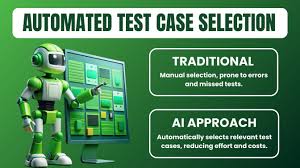
How Do You Select the Right Automation Tool for Regression Testing?
Scalability is crucial for long-term success. As applications grow, the Al regression testing for voice agents suite expands, requiring a tool that can handle increased test cases and execution loads. Cloud-based automation tools offer scalability by allowing parallel test execution, distributed testing, and integration with CI/CD pipelines. Tools like Selenium Grid, TestComplete, and Appium enable efficient execution of regression tests across multiple browsers, devices, and operating systems, ensuring that applications perform consistently across different environments.
Cost-effectiveness is also a significant factor in tool selection. Open-source automation tools like Selenium, Cypress, and JUnit provide flexibility without licensing costs, making them ideal for startups and small teams. However, commercial tools like UFT, TestComplete, and Tricentis Tosca offer advanced features, dedicated support, and enterprise-level scalability, which may justify their cost for larger organizations. It is essential to balance cost with functionality, ensuring that the chosen tool meets testing requirements without exceeding the budget.
Integration capabilities play a vital role in automation tool selection. Modern development practices involve continuous integration and continuous deployment (CI/CD), requiring testing tools that seamlessly integrate with CI/CD pipelines, version control systems, and defect tracking tools. Automation tools that work well with Jenkins, GitHub Actions, Azure DevOps, or GitLab CI/CD help streamline the testing process and enable faster delivery cycles. Choosing a tool with robust integration support enhances efficiency and improves overall software quality.
Selecting the right automation tool for regression testing requires a comprehensive evaluation of compatibility, ease of use, scalability, cost-effectiveness, and integration capabilities. By aligning the tool with business needs, technology stack, and team expertise, organizations can ensure efficient regression testing, accelerate software delivery, and maintain high-quality applications over time. A well-chosen automation tool becomes a valuable asset in achieving reliable and consistent software performance.