
Can an flexible printed circuit board be customized for specific applications?
Can an flexible printed circuit board be customized
Flexible printed circuit boards (PCBs) offer a remarkable degree of versatility and adaptability, making them ideal candidates for customization to suit specific applications across a wide range of industries. From wearable technology to automotive systems, medical devices to aerospace equipment, the ability to tailor flexible PCBs to meet the unique requirements of each application is a key factor driving their widespread adoption and innovation.
Customization of flexible PCBs begins with the design phase, where engineers collaborate closely with clients to understand their specific needs, performance criteria, and constraints. By leveraging advanced computer-aided design (CAD) software and simulation tools, designers can create custom layouts and configurations optimized for the intended application. This may involve adjusting the size, shape, and orientation of the flexible substrate, as well as optimizing the placement of components and routing of traces to achieve desired electrical performance and functionality.
One of the key advantages of flexible printed circuit board is their ability to conform to complex shapes and contours, allowing for seamless integration into products with unconventional form factors or space constraints. Whether it’s wrapping around a curved surface, bending to fit within a confined space, or conforming to the contours of a wearable device, flexible PCBs can be customized to match the geometry of the application, maximizing use of available space and minimizing design compromises.
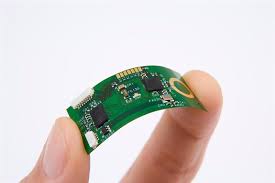
Can an flexible printed circuit board be customized for specific applications?
Moreover, flexible PCBs offer flexibility in material selection and construction, allowing designers to tailor their properties to meet specific performance requirements. Different types of flexible substrates, such as polyimide, polyester, or liquid crystal polymer (LCP), offer varying degrees of flexibility, temperature resistance, and dielectric properties, enabling designers to choose the most suitable material for the application. Additionally, advanced manufacturing processes such as additive manufacturing or laser direct structuring (LDS) allow for the integration of functional elements directly onto the flexible substrate, further enhancing customization possibilities.
Furthermore, customization of flexible PCBs extends beyond the physical layout and construction to include specialized features and functionalities tailored to specific applications. For example, in medical devices, flexible PCBs may incorporate biocompatible materials and sensor arrays for monitoring vital signs or delivering therapeutic treatments. In automotive systems, flexible PCBs may integrate high-speed data communication interfaces and robust protection circuitry for reliable operation in harsh environments. In consumer electronics, flexible PCBs may feature advanced display technologies and touch-sensitive interfaces for enhanced user experience.
Additionally, the modular nature of flexible PCBs facilitates scalability and reconfigurability, allowing for easy customization and adaptation to evolving requirements. By designing flexible PCBs with modular components and interfaces, manufacturers can accommodate changes in functionality, performance, or connectivity without requiring extensive redesign or retooling. This flexibility enables rapid prototyping, iterative development, and cost-effective production of custom solutions tailored to specific applications.
In conclusion, flexible printed circuit boards offer unparalleled opportunities for customization to meet the diverse needs of specific applications across various industries. From optimizing layout and construction to integrating specialized features and functionalities, flexible PCBs empower designers to create tailored solutions that deliver superior performance, reliability, and user experience. As technology continues to advance and applications become increasingly complex, the customizability of flexible PCBs will remain a driving force in shaping the future of electronic design and innovation.